Real Traffic Data vs Static Road Maps: Why the Gap Matters at Scale
Static routing tools predict ETA with no knowledge of this morning's accident. Real-time traffic closes that gap.
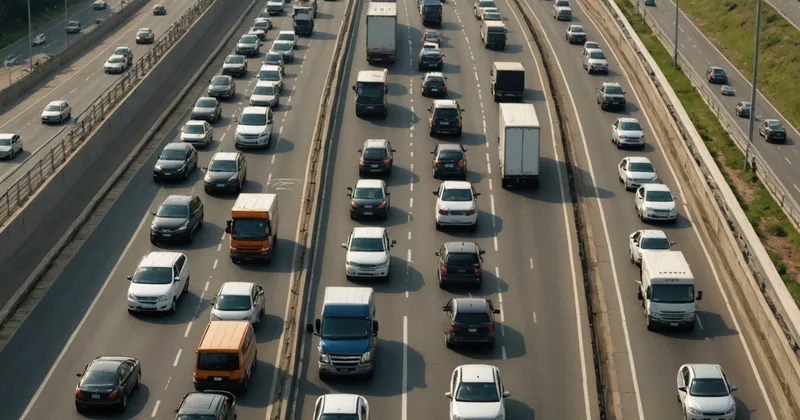
What Static Routing Tools Assume
A static routing tool plans routes using a fixed road network model. The model knows the road distance between any two points and a baseline travel time based on posted speed limits and road classification. It does not know that a bridge on a major artery is under construction and carrying 60% of its normal capacity. It does not know that school zone speed reductions are in effect on Tuesday and Thursday mornings on the road your driver uses to reach the first six stops. It does not know about the accident that happened at 6:15am on the interstate your driver was counting on to make the first time window.
This sounds like an edge case. It is not. On any given business day in a city of moderate size, there are multiple traffic events that materially affect travel times on roads that delivery fleets routinely use. A static routing tool produces a plan that assumes none of those events exist. The plan is internally consistent but externally fragile. The first time reality deviates from the baseline (which is every day), drivers are late, time windows are missed, and dispatchers are making re-route decisions they were not equipped to make with the information in hand.
The Gap Grows With Fleet Size and Distance
For a single driver running 15 short local stops, the gap between static and real-time routing is manageable. A 10-minute travel time underestimate across 15 stops is annoying but not catastrophic. The driver runs late on a few stops, the customers adjust.
For a fleet running 60 stops per driver across longer distances, the gap is compounding. A travel time underestimate early in the route pushes the driver behind schedule. Each subsequent stop is later than planned. Time windows that were achievable with the planned sequence become unachievable because the driver is already behind. By midday, the dispatcher is managing a route that has drifted significantly from the plan, with no systematic information about which stops are at risk and which are still achievable.
The problem is worst for routes that include hard time windows and tight geographic sequences. A driver routing across a metro area during rush hour, with a mix of commercial stops with strict receiving windows and residential stops with customer-arranged arrival times, is particularly exposed to static routing failures. The plan was built for the road network at 2am. The driver is operating it at 8am.
How Real-Time Traffic Integration Works
A routing tool with live traffic integration pulls current and near-term traffic data from a provider that aggregates signals from GPS devices, road sensors, and reported incidents. The routing engine uses this data to adjust travel time estimates when building routes.
There are two relevant dimensions: historical traffic patterns (the Tuesday 8am corridor is typically at 60% speed; this is predictable and should be baked into the morning plan) and real-time incidents (today there is an accident at a specific intersection, causing 20-minute delays starting 30 minutes ago). A well-implemented traffic integration uses both. Historical patterns improve the initial route plan. Real-time incident data triggers ETA updates for routes already in progress.
The practical implication for dispatchers is that ETAs shown to customers at the start of the day are more accurate because the plan was built with realistic travel times, not speed-limit assumptions. And when something changes mid-day (an accident, a road closure), the system can identify which of the driver's remaining stops are now at risk of missing their windows and surface that information to the dispatcher before the window passes.
Mid-Day Re-Routing
Traffic-aware routing during initial plan building is the first benefit. Mid-day re-routing is the second, and it is often more valuable in practice.
A route plan dispatched at 7am is based on conditions at 7am. By 10am, conditions have changed. A driver running late due to a slow commercial delivery, a road closure, or a customer who was not available at their scheduled window now has a sequence of remaining stops that was optimized for a driver in a different position at a different time. Naively continuing the original sequence will produce more missed windows.
Re-routing the driver's remaining stops from their current position, with current traffic data, produces a new sequence optimized for the current situation. This is not a full re-plan (the driver has completed stops cannot be un-completed). It is an optimization of the remaining stops given the driver's current location, remaining time window constraints, and current traffic conditions.
This capability requires both the traffic integration and an active connection to the driver's current position. When both exist, a dispatcher can trigger a re-route from their dashboard and push the updated sequence to the driver's app in under a minute. The alternative is the dispatcher calling the driver, talking through the situation, and the driver improvising a revised sequence from memory while moving. The phone-and-improvise approach is slower and consistently produces worse outcomes.
The Cost of Getting This Wrong at Scale
Fleet operators who have calculated the cost of static routing failures typically find it in time-window compliance rates and failed delivery costs. A fleet running 500 deliveries per day at 88% time-window compliance is experiencing 60 missed windows daily. Some of those misses are unavoidable. Many are the result of route plans built with travel time assumptions that did not reflect real conditions on the day.
Better traffic data does not eliminate all misses, but it eliminates the structural ones: the misses that happen because the plan was built with no knowledge of conditions the driver will actually encounter. Those structural misses are predictable and preventable. Real-time traffic integration is the tool that prevents them.